![[HST LOGO]](/pics/logo2.jpg "HST 2011 - Home")
|
|
9th IARU High Speed Telegraphy (HST) World Championship
|
|
Information
HST Software |
About High Speed TelegraphyHigh Speed Telegraphy, short HST is a popular radiosport challenge where Morse code at high speed has to be received, copied and sent. Under the auspices of the International Amateur Radio Union (IARU), international HST competitions are organized at regular intervals. Since 1995, World Championships take place each odd year, since 2004 there are additionally Region 1 championships which take place in the even years in between. In 2011, Germany, represented by the DARC has the pleasure to host the World Championship. Competitors from about 20 different countries are expected to join this competition. Traditionally, HST is very popular in Eastern Europe and most past championships have been held there. With the championships in Germany, we hope to welcome new countries to join us! HST competitions are held in accordance with the rules set forth by the IARU HST Working Group. Here's a little summary of the rules and the competitions itself: Short Summary of the HST Competitions
The competitions itself are:
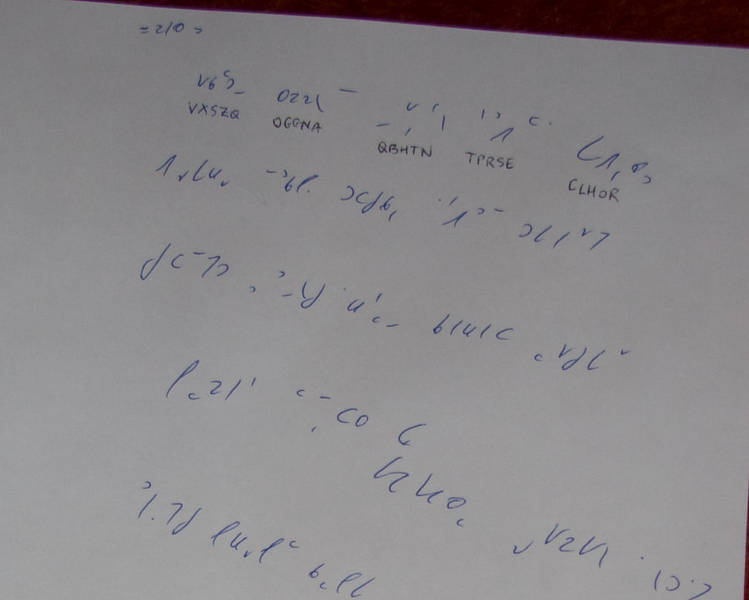
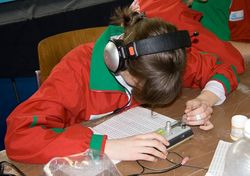
ReceivingClassical reception of five-character-groups. This competition consists of three parts: letters, figures and mixed groups (letters, figures and interpunctation). The competitors copy the code groups, to paper or with a computer keyboard, from a given start speed (usually 80 characters per minute) in increments of 10 characters per minute, up to their personal maximum speed. TransmittingTransmission of five-character-groups, like above (letters, figures, mixed). The competitor may use his own Morse key and choose his speed. The transmission is monitored by three referees and judged by speed and accuracy. RufzXP
The third competition part is closer to practical ham radio operation. Callsign receiving with the software RufzXP. This program sends single amateur radio calls which have to be copied and typed in by the user. If a callsign was copied correctly, the speed for the next callsign increases; otherwise it decreases. The competitor may choose his initial speed. The winner is the competitor with the highest generated score, which closely correlates to the highest copied speed. MorseRunnerReceiving callsigns in a pileup situation, where more than one signal is present at a time, is the essence of the last part of the competition, MorseRunner. In a ten minute attempt, the competitor has to complete as many virtual contacts as possible, with a constant pileup of up to four parallel callers. |
![[I2RTF banner]](/pics/begali_banner2.jpg "I2RTF - P. Begali keys")